26.5.21

Miriam Teppich and Julian Broughton 27 May programme

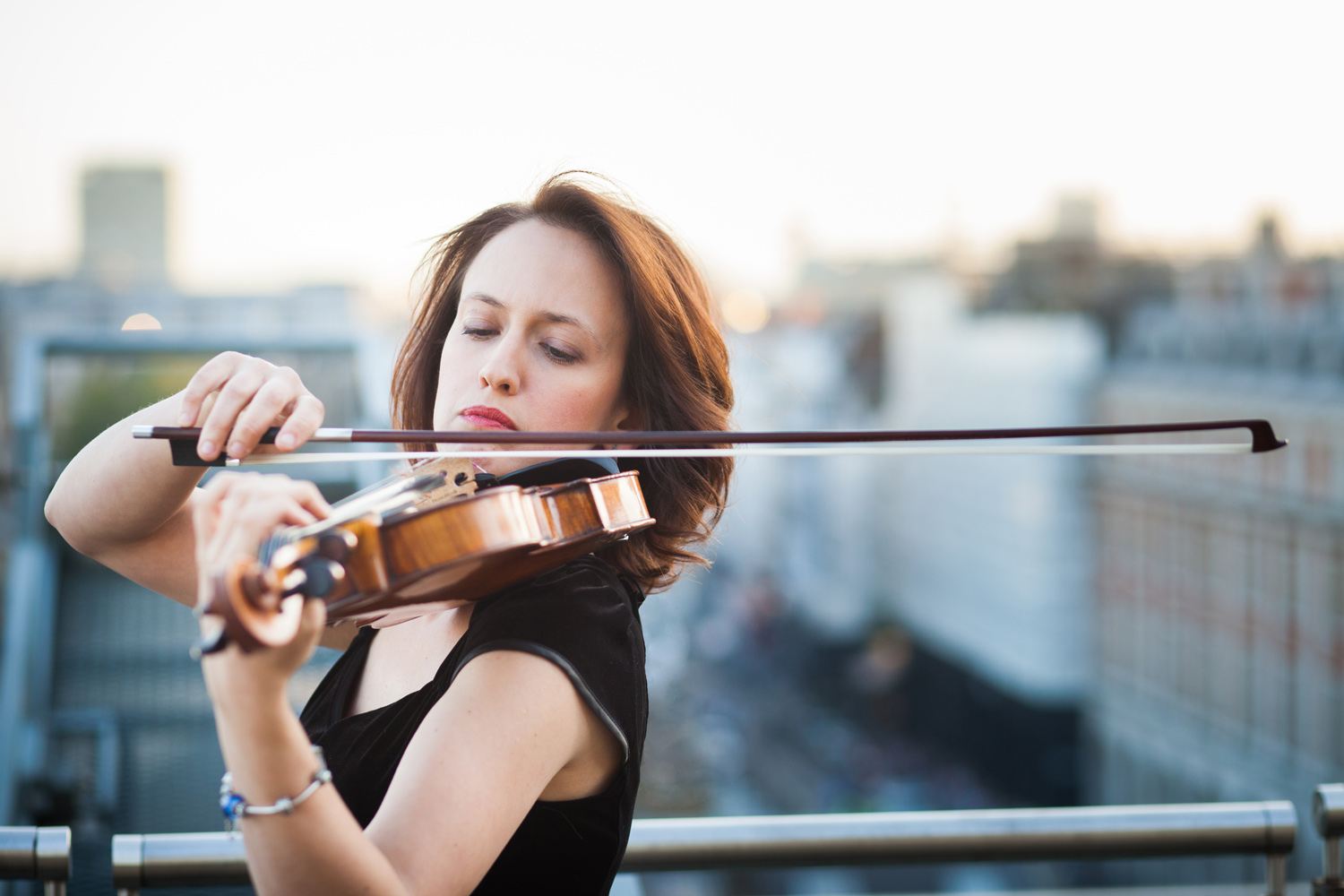
Thursday 27 May 7pm, Miriam Teppich (violin) and Julian Broughton (piano)

Ysaye, Sonata for Solo Violin no. 4 op. 27 in E minor
Clara Schumann, Romance no. 1 op. 22
Broughton, Sonata for violin and piano
Elgar, Sonata op.82

Programme notes

Ysaye Sonata for solo violin in E minor op. 27 no.4

The Sonata No 4 in E minor is dedicated to Fritz Kreisler (1875–1962). Kreisler entered the Vienna Conservatory in 1882, then in 1885 moved to the Paris Conservatoire, gaining a unanimous Premier Prix in 1887. His most important commission was Elgar’s Violin Concerto which he premiered in 1910, but Elgar was as far as he ventured in the music of his time. As a composer he became famous for his short pieces in imitation of Baroque and Classical composers, to which he often appended their name rather than his own—1910 was also the year of the Praeludium and Allegro, supposedly by Pugnani, as well as the Caprice viennois Kreisler owned up to.

In writing three movements called Allemanda, Sarabande and Finale, Ysaÿe was clearly having a joke—‘if you can do spoof Baroque, so can I’. Throughout, the writing is tonal, with very little that would have discountenanced J S Bach. After a slow introduction, we hear a motif of four rising notes (E, F sharp, G, A) that undergoes various developments, ending in a fugue. The same four notes in reverse go right through the Sarabande, at first pizzicato (‘avec vibrations’), then bowed.

In the Finale the four notes are once more descending and may well be a tribute to Kreisler’s ‘Pugnani’ Allegro. Apart from a dotted central section, the movement also echoes the ‘Pugnani’ in its relentless semiquavers.

Clara Schumann Romance no.1 op 22 (from Three Romances) Andante molto

Having moved to Düsseldorf in 1853, Clara Schumann, who said that "Women are not born to compose," produced several works, including these three romances. Dedicated to the legendary violinist Joseph Joachim, Schumann and Joachim went on tour with them, even playing them before King George V of Hanover, who was "completely ecstatic" upon hearing them. A critic for the Neue Berliner Musikzeitung praised them, declaring: "All three pieces display an individual character conceived in a truly sincere manner and written in a delicate and fragrant hand."

Stephen Pettitt for The Times, wrote, "Lush and poignant, they make one regret that Clara's career as a composer became subordinate to her husband's." The first Romance begins with hints of gypsy pathos, before a brief central theme with energetic arpeggios ensues. This is followed by a final section similar to the first, in which Clara charmingly refers to the main theme from her husband Robert Schumann’s first violin sonata.

Sir Edward Elgar wrote his Violin Sonata in E minor, Op. 82, in 1918, at the same time as he wrote his String Quartet in E minor and his Piano Quintet in A minor. These three chamber music works were all written at "Brinkwells", the country house near Fittleworth in West Sussex that Lady Elgar had acquired for her husband to recuperate and compose in, and they mark his major contribution to the chamber music genre.[1] His Cello Concerto in E minor of 1919 completed the quartet of introspective and melancholy works that comprised Elgar's last major creative spurt before his death in 1934.

The Violin Sonata is scored for the usual combination of violin and piano, and has three movements: Allegro, Romance: Andante, Allegro non troppo

Elgar's wife noted that the slow movement seemed to be influenced by the 'wood magic' or genii loci of the Fittleworth woods.

When the sonata was close to completion, Elgar offered to dedicate it to a family friend, Marie Joshua, and wrote to her: "I fear it does not carry us any further but it is full of golden sounds and I like it, but you must not expect anything violently chromatic or cubist". Marie Joshua died four days after receiving the letter, before she had had an opportunity to reply. As a tribute to her memory, Elgar quoted the dolcissimo melody from the slow movement just before the coda of the final movement.[1][2]

The Violin Sonata in E minor was completed on 15 September 1918,[2] and first performed on 13 March 1919 at a semi-public meeting of the British Music Society by Elgar's friend W. H. Reed with Anthony Bernard on piano. With Elgar present, it received its first public performance on 21 March 1919.


Julian Broughton writes: “Written in 2014 for Ellie Blackshaw and Rachel Fryer, my Sonata for Violin and Piano is in three movements.

i) Presto. A kind of scherzo, this movement begins with playful dialogue which is contrasted with passages of sustained melody.

ii) Lento. In complete contrast to the first movement, this is a fugue which breaks out of itself into an expressive and richly harmonised middle section before returning to the rather austere mood of the opening.

iii) Allegro molto. Lively and fast, this returns to the mood of the opening movement. It briefly recalls the melancholy of the middle movement before ending with virtuoso energy.

10.4.21

Reopening concerts: programmes update

We're looking forward to our first two recitals after lockdown - including a world premier! 

Book tickets here.

Thursday 27 May 7pm, Miriam Teppich (violin) and Julian Broughton (piano)
Ysaye, Sonata for Solo Violin no. 4 op. 27 in E minor
Clara Schumann, Romance no. 1 op. 22
Broughton, Sonata for violin and piano
Elgar, Sonata op.82


Wednesday 30 June 7pm
, Sam Haywood (piano)
Join Sam Haywood for a unique musical adventure, 'Old Friends and New', on which you'll encounter some of the most beloved piano works (by Schubert, Rachmaniniff, Beethoven and Chopin) alongside rare and beautiful miniatures by women composers. The pieces will be performed in pairs, carefully chosen to complement each other. The programme includes the World Premier of 'Rain', a passionate and compelling work by the Czech composer Jelena Pouliçková.

Coronavirus restrictions, please note
By 27 May, we expect to be able to accommodate a limited audience, seated in groups of up to six or of one or two households. The ticketing site will be kept updated according to latest regiulation. Regrettably, the need for social distancing will prohibit an interval or refreshments, though this may change by 30 June. 


3.4.21

Reopening news: Concerts this Summer


Wishing all our supporters a very Happy Easter, we're also looking forward to the reopening of concert venues in a few weeks' time, and are excited to announce the first of our 2021 chamber recitals at King Charles church.

Save the dates!

Thursday 27 May, Miriam Teppich (violin) and Julian Broughton (piano)

Wednesday 30 June, Sam Haywood (piano)

Further details to follow soon, including dates for concerts in July.


24.12.20

Christmas music from King Charles the Martyr


We wish all our friends a very Happy Christmas, and look forward to a fresh start for our concert series in 2021.

In the meantime, please enjoy some Christmas music from King Charles church!

Music for Advent

Christmas carols and Widor's Toccata

Available from 8am on Christmas Day, Messiaen's Dieu Parmi Nous played by Michael Bacon.

All best wishes for the New Year.

30.11.20

Musical Advent Calendar


Tune in each day during Advent for some seasonal music, including some Christmas favourites, provided by the musicians of King Charles church, in this YouTube Advent Calendar.

And go to the church's Facebook page for the Christmas Carol service, at 6:30pm on Sunday 20 December.

16.11.20

Christmas Vespers: concert 5 December

Monteverdi - a Vespers sequence for Christmas
Saturday 5 December, 7pm 

UPDATE: THIS EVENT IS NOW CANCELLED

We are thrilled to announce the third annual Baroque concert at King Charles with players from the Orchestra of the Age of Enlightenment, directed by Steven Devine, following the overwhelming success of Handel's Messiah in 2018 and Bach's Christmas Oaratorio in 2019. 

Tailored for the current circumstances, this performance features a small group perfectly suited to the space and acoustic of King Charles church. 

Booking information

Kate Semmens - soprano
Rory Carver - tenor
Daniel Edgar & Nia Lewis – violins
Lynda Sayce – theorbo
Steven Devine – organ
Decimus Consort of Voices

Please book early to be in the audience for this special event. With social distancing measures, capacity is limited to under 50. Of course, we are working on the basis that lockdown restrictions will ease after 2nd December. In the event that circumstances change, all ticket purchases will be refunded. 

Programme

Domine ad adiuvandum (1610): chorus
Pulchra Es (1610): duet
Lute solo
Laudate Dominum: solo
Castello Sonata
Antiphon, Pulchra es (chant)
Nigra Sum (1610): solo
Organ solo
Puer Natus (Chiome d’oro): duet
Magnificat a 6 (1610): tutti

Monteverdi is most famous for the Vespers of 1610, comprising antiphons, sacred songs and psalm settings for a large and diverse group of singers and instrumentalists. Taking this as our inspiration, we present a selection of Monteverdi's music for the vespers service that would have been performed in the Christmas season. In the Baroque intimacy of King Charles, we can transport you back to 17th century Mantua or Venice for an inspiring evening of celebration. 

Steven Devine writes: “'Straighten’d Times' as Pepys would have put it, are nothing new and life carried on as normally as circumstances would allow. In Monteverdi’s Venice, it was common practice to replace vocal parts with instrumental ones and vice-versa, or leave them out completely, leaving the bass team (itself a flexible, improvising ensemble) to fill in missing harmonies or fill out textures as appropriate. Equally the distribution of voice parts was much less strict than we expect today as the over-arching concern was the completeness of the text and harmonic completeness."

Music at King Charles has continued to stage concerts this year, whether online or to a live audience, because we know that keeping music alive is of such importance to our society. Should you so wish, you can also support our work through a donation, which will help us pay artists' fees. Donations welcome here.


29.10.20

Catch up with our concerts online

Thank you to everyone who has attended or watched our latest concerts. Here's how to catch them while they are still online - for a limited period only!

View the first two concerts here vimeo.com/user/118615689/folder/2516702 
- Kate Semmens and Steven Devine's Italian Baroque concert (available until 17 November) 
- Alex Metcalfe's piano recital of music by Mozart, Chopin, Liszt, Debussy and Ravel (available until 24 November). 

Watch the TW International Music Competition recital by Emma Halnan and Charles Wiffen here https://www.youtube.com/watch?v=SqGMqyDkQkE&feature=youtu.be Available until 4 November - for one week only.

We will continue to do what we can to keep music live in these difficult times. Please follow this site for further updates, or find us on Twitter, @musicatkcmtw

Donations, however small, are welcomed to help with getting money to performers. 

They can be made for Music at King Charles (first two concerts) here https://www.gofundme.com/f/music-at-king-charles-concerts-october-2020 

15.10.20

October dates for live and online concerts

Alex Metcalfe
Here's what's coming up in the rest of October. Many thanks to all our supporters for joining us in person and online!

To support our concerts, please consider making a donation to Music at King Charles and to Tunbridge Wells Music Competition.

Saturday 17 October, 7pm. Online premiere of our first concert, Virtuosic love in the Italian Renaissance - a dramatic and sensuous selection of 17th century keyboard music and songs by Kate Semmens and Steven Devine (available until 17 November).  vimeo.com/user/118615689/folder/2516702 

Wednesday 21 October, 7pm. Live concert at the church by Emma Halnan (flute) and Charles Wiffen (piano), a fund-raising concert for Tunbridge Wells International Music Competition  Ticket information 

Saturday 24 October, 7pm. Online premiere of Alex Metcalfe's piano recital or music by Mozart, Chopin, Liszt, Debussy and Ravel (available until 24 November). vimeo.com/user/118615689/folder/2516702 

Wednesday 28 October, 7pm. Online premiere of Emma and Charles's recital, link to be announced.

With concert venues only gradually reopening, to small audiences and with safety precautions in place, we're thrilled to be playing our part in bringing music back to real life. 

The last six months or more have been incredibly challenging for the arts, and we want to give musicians every encouragement. The number of people who can be accommodated at a live concert - and possible income - is quite limited, so please show your support by watching their performances online and making a donation, however small, in response. (Links will be given alongside the recordings.)


11.10.20

Concert 14 October: Alex Metcalfe

Piano recital by Alex Metcalfe
Wednesday 14 October, 7pm
Ticket information

PROGRAMME

Mozart: Sonata in F, K.332
Chopin: Etude in E, OP.10/3
Liszt: Etude de Concert S.144/3 'Un Sospiro'
Debussy: La Cathedrale Engoutie
Ravel: Jeux d'eau

Alex Metcalfe studied at the Royal College of Music with Raymond Fischer (piano) and William Mival (composition). He subsequently gained Nelly Ben-Or Foundation scholarship to study the application of Alexander Technique to the piano. As a soloist and chamber musician he has performed extensive around Europe and the UK at venues including Kings Place, LSO St. Luke’s and St James’ Palace, and played with the London Sinfonietta and the London Symphony Orchestra. His piano playing has been featured on BBC Radio 3’s In Tune and BBC 2’s The Culture Show. His current CD release, Four Ogives and other works by Erik Satie is available from alexmetcalfe.com

If you are unable to attend the concert, do tune in to the recording, which will be premiered on 24 October at 7pm here vimeo.com/user/118615689/folder/2516702 

NEXT CONCERT

Emma Halnan (flute) and Charles Wiffen (piano) 
Fund-raising concert for Tunbridge Wells International Music Competition 

One of a series of streamed recitals by young musicians who were finalists in the Competition during the past ten years. 
Music by Arnold, Prokofiev, Kriesler and Georges Hüe 
Live concert: Wednesday 21 October, 7pm 
Recording premiere: Wednesday 28 October, 7pm

Ticket information

With concert venues only gradually reopening, to small audiences and with safety precautions in place, we're thrilled to be playing our part in bringing music back to real life. 

Every precaution is being taken to ensure the safety and confidence of our audience. The concerts will place midweek so that the church is not busy on consecutive days, to reduce further the risk of infection. The same, now familiar, procedures that are in place for services will be followed at the concerts, such as distanced seating and the wearing of face coverings.